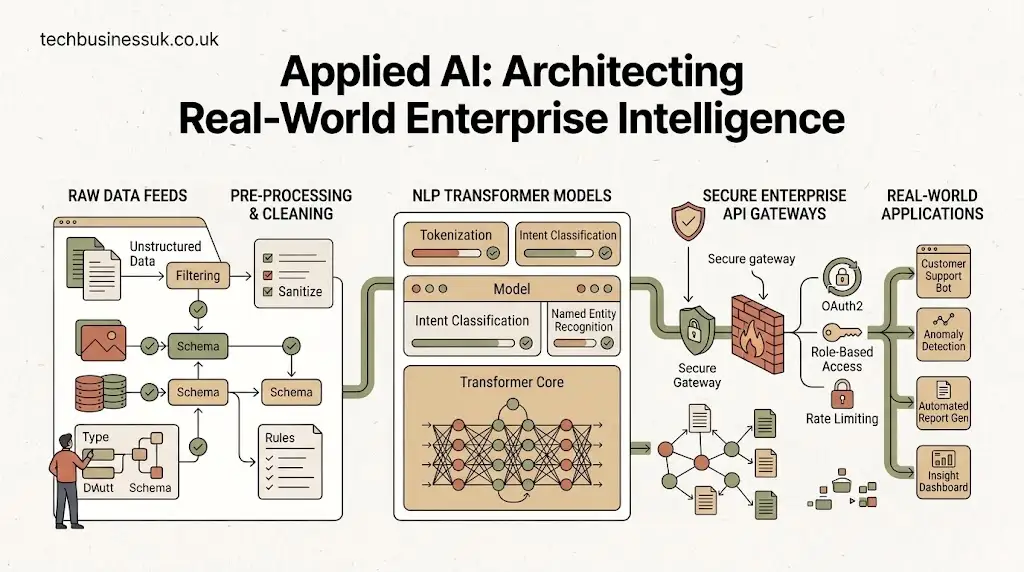
Deploying Large Language Models (LLMs) in enterprise production environments requires moving far beyond basic prompt engineering and simple document ingestion. While initial proof-of-concept scripts demonstrate potential, operationalizing generative intelligence at scale demands a resilient, low-latency, and permission-aware Enterprise RAG Architecture.
To deliver measurable business value, engineering teams must bridge raw probabilistic models with enterprise ground truth—ensuring high retrieval precision, strict data governance, sub-100ms response times, and deterministic safety.
1. What is Enterprise RAG Architecture?
From Basic RAG Scripts to Production Systems
Enterprise RAG Architecture is the end-to-end software engineering framework that couples Retrieval-Augmented Generation with enterprise data systems. Unlike simple toy RAG scripts, an enterprise-grade architecture manages multi-tenant access control, hybrid vector-keyword retrieval, automated ingestion pipelines, and continuous observability to deliver grounded, hallucination-free LLM outputs.
Basic RAG implementations typically rely on naive text splitters, single-index vector stores, and unencrypted memory. In contrast, robust enterprise systems integrate directly into complex corporate data fabrics—handling real-time schema shifts, strict user authorization boundaries, and distributed scale across cloud infrastructure.
+-----------------------------------------------------------------------+
|                              BASIC RAG                                |
| Single PDF Ingestion | Naive Character Chunking | Unfiltered Retrieval|
+-----------------------------------------------------------------------+
                                    |
                                    v  (Enterprise Engineering & Security)
+-----------------------------------------------------------------------+
|                      ENTERPRISE RAG ARCHITECTURE                      |
| Hybrid Search | RBAC Vector Filtering | Cross-Encoding | SLA Latency |
+-----------------------------------------------------------------------+
RAG vs. Model Fine-Tuning: Making the Strategic Enterprise Choice
When operationalizing domain intelligence within an Applied AI enterprise guide, technology leaders frequently evaluate whether to fine-tune a foundation model or deploy a Retrieval-Augmented Generation pipeline.
- Fine-Tuning (e.g., QLoRA, Full Parameter Adaptation): Best suited for teaching an LLM specialized style, tone, novel terminology, or rigid output formatting. Fine-tuning bakes static knowledge directly into model weights, making it expensive to update frequently and susceptible to confident hallucinations when facts change.
- Retrieval-Augmented Generation (RAG): Best suited for serving dynamic, fast-changing enterprise ground truth. RAG decouples knowledge storage from the LLM’s reasoning engine, allowing organizations to update information instantaneously by re-indexing vector databases without retraining model parameters.
In modern production environments, high-performing engineering teams often pair both: using fine-tuning to optimize reasoning patterns and output structure, while relying on Enterprise RAG Architecture for real-time fact retrieval.
2. Core Operational Components of Enterprise RAG
Building a resilient retrieval engine requires coordinating multiple pipeline stages—from initial raw document ingestion to dynamic prompt assembly.
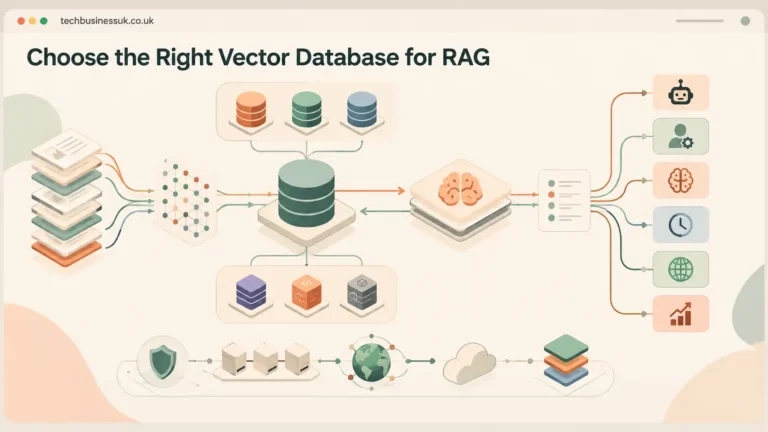
[Raw Enterprise Data] --> [Semantic Chunking & Embedding] --> [Vector Database (HNSW)]
                                                                      |
[User Query] ------------> [Hybrid Retrieval (Dense + Sparse)] <-------+
                                    |
                                    v
                         [Cross-Encoder Reranker]
                                    |
                                    v
                         [Context Hydration Layer] ---------> [LLM Inference Endpoint]
Advanced Ingestion Pipelines & Document Chunking
The accuracy of an enterprise retrieval engine depends directly on the quality of its document parsing. Naive character-count splitters frequently sever context mid-sentence or break semantic relationships across tabular structures.
Modern enterprise pipelines utilize advanced chunking strategies:
- Semantic Chunking: Analyzing text structure dynamically using natural language processing to split documents along natural topic shifts, paragraph boundaries, and heading hierarchies.
- Parent-Child (Hierarchical) Indexing: Storing small text chunks (child chunks) for precise vector search retrieval while linking them back to larger surrounding context blocks (parent chunks) passed to the LLM during generation.
- Contextual Document Header Injection: Prepending metadata (such as document title, section heading, author, and creation date) to every individual chunk before vectorization to maintain global context during embedding generation.
Hybrid Retrieval Engines: Combining Dense Vector and Sparse Keyword Search
Relying exclusively on dense vector search (cosine similarity across embeddings) can lead to missed retrievals when users search for specific product IDs, legal case numbers, or precise acronyms.
An enterprise-grade retrieval pipeline deploys a hybrid search strategy:
- Dense Vector Retrieval: Captures deep semantic intent, conceptual similarity, and multi-lingual relationships.
- Sparse Keyword Search (BM25 / Full-Text): Guarantees exact keyword matching for serial numbers, specialized terminology, and proper nouns.
- Cross-Encoder Reranking: Consolidates candidate passages from both dense and sparse retrievers, scoring them through a dedicated cross-encoder model (such as BGE-Reranker or Cohere Rerank) to pass only the top $k$ most relevant context chunks to the LLM.
Context Hydration & Dynamic Prompt Assembly
Once context passages are retrieved and reranked, a sub-100ms context hydration middleware intercepts the payload. This layer formats retrieved text fragments into structured JSON or Markdown, enforces system-level instruction templates, and validates that total context tokens remain strictly within defined inference budget limits.
3. Key Architectural Dimensions (Comparison Table)
The table below highlights the operational differences between basic, unoptimized RAG setups and production-grade enterprise architectures.
4. Securing the Context Boundary: Data Governance & Privacy
Deploying generative models within corporate networks introduces critical security obligations around data privacy and access permissions.
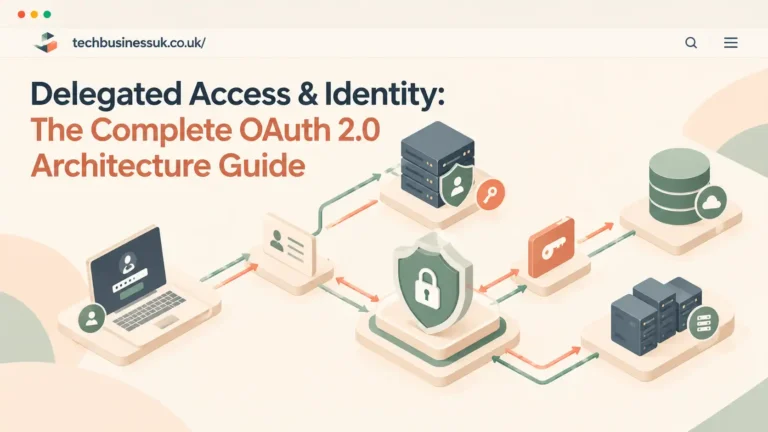
[User Request + JWT Token]
            |
            v
[RBAC Vector Filter Engine] ---> (Applies metadata mask: tenant_id == user.tenant_id)
            |
            v
[Vector Store Search] ---------> (Returns only authorized context chunks)
            |
            v
[AI Guardrail Interceptor] ----> (Scans for prompt injection / PII leakage)
            |
            v
[Secure LLM Context Injection]
Role-Based Access Control (RBAC) at the Vector Layer
A major enterprise vulnerability occurs when an LLM retrieves context containing sensitive records (such as HR salaries or executive emails) and presents it to an unauthorized employee.
To prevent data breaches:
- Metadata Authorization Tagging: Embed user access groups, department IDs, and classification tags directly into vector metadata payloads at ingestion.
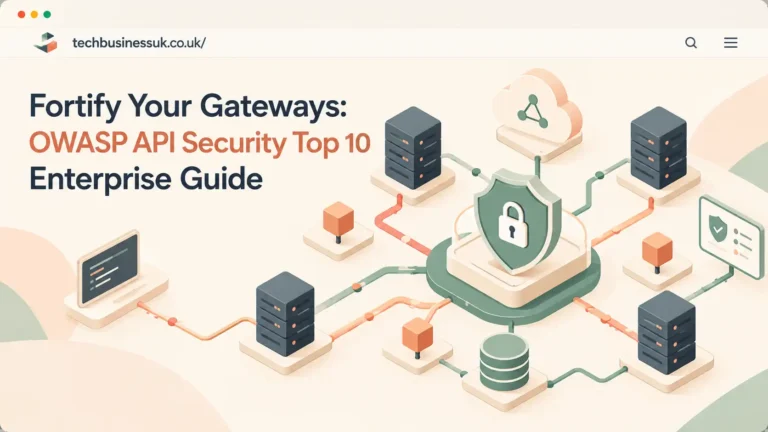
- Pre-Filtering at Query Runtime: Force vector search engines (such as Pinecone, Qdrant, or Milvus) to apply deterministic metadata filters during nearest-neighbor execution, ensuring users only retrieve context matching their permission scope.
Mitigating Context Poisoning and Indirect Prompt Injection
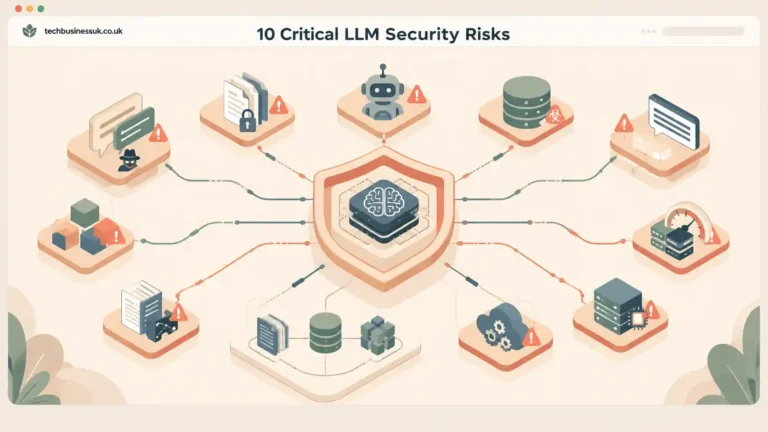
Retrieved documents can sometimes contain untrusted external data—such as web-scraped content or customer support attachments—designed to hijack the underlying system prompt.
Enterprise platforms protect their boundaries by placing active AI guardrails before and after the model invocation phase. Furthermore, implementing active prompt injection prevention controls ensures retrieved passages are stripped of adversarial commands before context injection occurs.
5. Engineering for Performance: Latency, Cost, and Accuracy
Maintaining optimal performance across high-throughput enterprise applications requires balancing vector query speed with inference execution costs.
                    LATENCY & ACCURACY OPTIMIZATION
+-------------------------------------------------------------------+
| 1. SEMANTIC CACHING: Intercept duplicate queries via Redis Cache  |
+-------------------------------------------------------------------+
                                  |
                                  v
+-------------------------------------------------------------------+
| 2. HNSW INDEXING: Execute sub-100ms vector retrieval in-memory     |
+-------------------------------------------------------------------+
                                  |
                                  v
+-------------------------------------------------------------------+
| 3. OBSERVABILITY: Monitor latency, token drift, and evaluation    |
+-------------------------------------------------------------------+
Optimizing Retrieval Latency (Sub-100ms Search)
To meet strict Service Level Agreements (SLAs), engineering teams optimize their vector retrieval infrastructure:
- Hierarchical Navigable Small World (HNSW) Indexes: Utilizing graph-based approximate nearest neighbor (ANN) indexing to achieve logarithmic query search speeds across millions of high-dimensional vectors.
- Vector Quantization (PQ/Scalar Quantization): Compressing float32 embeddings to int8 precision to reduce memory footprint by up to 75% while maintaining recall accuracy above 95%.
- Semantic Query Caching: Storing previous prompt embeddings and generated answers in high-performance memory stores (such as Redis) to serve identical user requests instantly without calling the retriever or LLM.
Hallucination Reduction and Continuous Evaluation
Ensuring model fidelity requires continuous, automated monitoring. Production architectures integrate end-to-end LLM observability platforms to trace token usage, context relevance, and retrieval precision across every transaction.
By tracking automated evaluation frameworks (such as Ragas), engineers continuously measure three core metrics:
- Context Precision: Evaluating whether all retrieved chunks are strictly relevant to the user query.
- Faithfulness: Verifying that the LLM’s final response relies exclusively on the provided retrieved context.
- Answer Relevance: Confirming that the generated response directly answers the original user prompt without off-topic drift.
6. Frequently Asked Questions (FAQ)
What vector database is best for Enterprise RAG Architecture?
The choice depends on your infrastructure constraints. Cloud-native vector databases like Pinecone and Serverless Qdrant excel at multi-tenant scalability and low operational management. For on-premise, private VPC, or self-hosted requirements, open-source engines like Milvus, ChromaDB, or PGVector (PostgreSQL extension) offer robust vector indexing with full data sovereignty.
How does Enterprise RAG reduce LLM hallucinations?
Enterprise RAG reduces hallucinations by grounding the language model strictly within verified enterprise documents. By constraining the LLM’s system prompt to answer using only the retrieved context chunks—and setting decoding temperature to $0.0$—the system acts as a synthesis engine rather than an ungrounded memory source.
Can Enterprise RAG handle non-textual data like PDFs, charts, and images?
Yes. Modern enterprise RAG pipelines utilize multi-modal ingestion models. Optical Character Recognition (OCR) tools and vision-language models parse complex PDF layouts, extract tabular data into structured Markdown/JSON, and generate semantic text descriptions for embedded charts and diagrams before vectorization.
About the Author