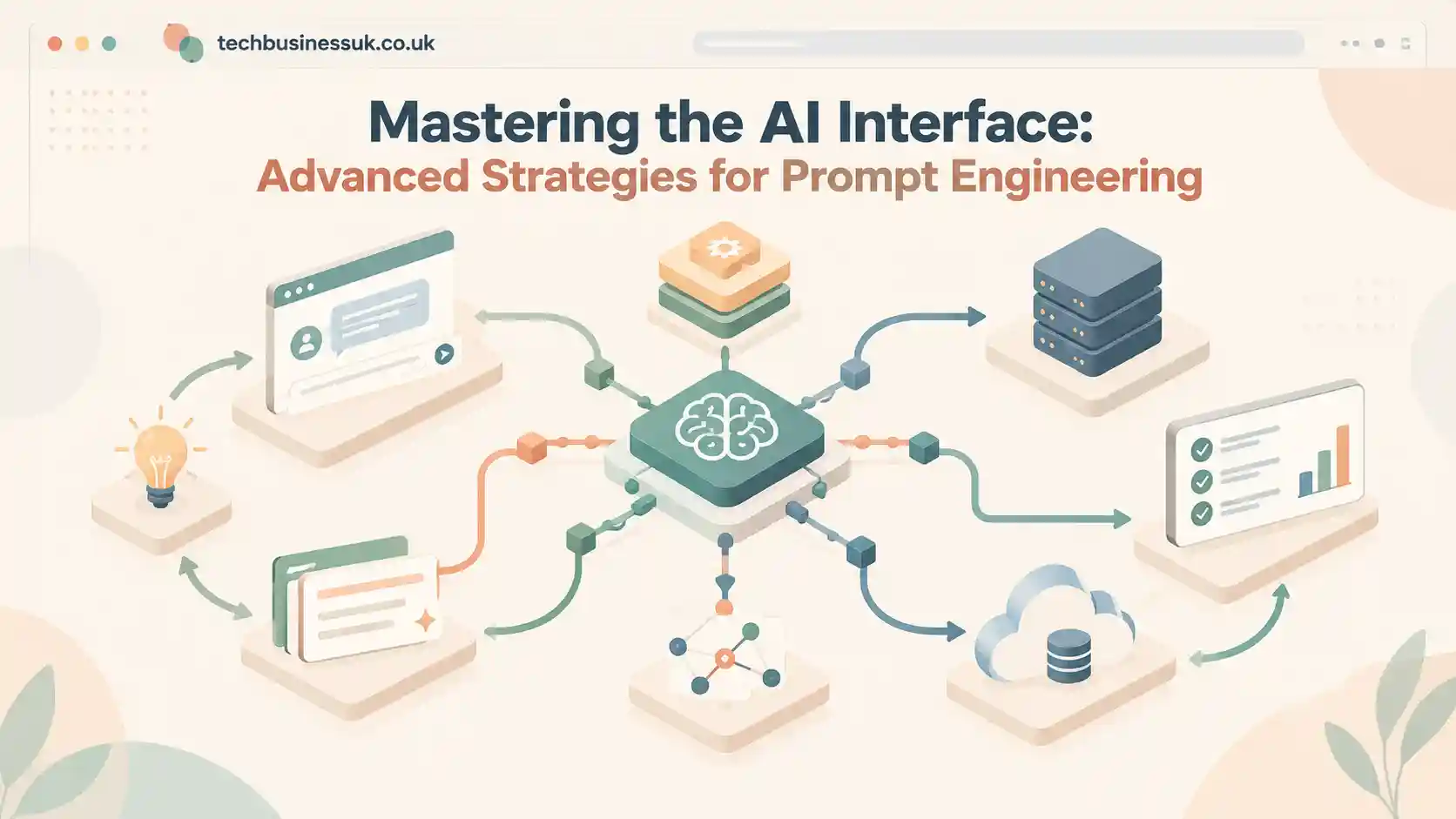
Prompt engineering has shifted from a trial-and-error craft into a core discipline of software development. As large language models (LLMs) anchor modern software stacks, the ability to control model behavior through precise context, structure, and instruction determines the reliability of AI-driven applications. This guide breaks down the core mechanics, practical frameworks, and technical trade-offs required to engineer robust prompts in production systems within the broader scope of Applied AI.
+-----------------------------------------------------------------------+
|                            KEY TAKEAWAYS                              |
+-----------------------------------------------------------------------+
| 1. Context Shapes Reasoning: LLMs do not execute code; they compute  |
|    probabilistic token completions based on provided context windows. |
|                                                                       |
| 2. Structure Eliminates Ambiguity: Explicit constraints, schemas, and |
|    few-shot examples drastically reduce hallucination rates.          |
|                                                                       |
| 3. Engineering Over Magic: Effective prompt engineering relies on      |
|    systematic evaluation, version control, and operational metrics.   |
|                                                                       |
| 4. Strategic Alignment: Prompting provides instant iteration at zero  |
|    training cost, serving as the primary interface before fine-tuning.|
+-----------------------------------------------------------------------+
What is Prompt Engineering? Core Concepts and Evolution
At its core, prompt engineering is the practice of structuring text input to guide autoregressive language models toward producing specific, predictable outputs. Language models operate by predicting the most statistically probable next token given an input sequence. Without explicit boundary constraints, a model draws broadly from its training distribution, which often leads to vague, off-target, or hallucinated responses.
The discipline evolved rapidly alongside model capabilities:
[Raw Text Completion] ---> [Instruction Tuning] ---> [In-Context Learning] ---> [Agentic Orchestration]
  Predict next word          Follow structured task     Infer rules via examples     Multi-step execution tool use
- Instruction Tuning: Models shifted from simple document completion engines into system actors capable of following direct commands.
- In-Context Learning: System designers realized that passing examples inside the input payload allowed models to adapt to new tasks without modifying underlying weights.
- Agentic Orchestration: Modern prompt design controls autonomous loops, dynamic tool calling, and structured JSON outputs.
Understanding this trajectory highlights why learn prompt engineering strategies matter today: prompts are no longer simple search queries—they function as execution logic for non-deterministic runtime environments.
Essential Techniques to Learn Prompt Engineering
Building production-ready systems requires moving beyond basic natural language requests. Engineers use specific architectural patterns to channel LLM reasoning effectively.
                      +-----------------------------+
                      |      PROMPTING FRAMEWORKS   |
                      +-----------------------------+
                                     |
         +-----------------+---------+---------+-----------------+
         |                 |                   |                 |
         v                 v                   v                 v
  +--------------+  +--------------+    +--------------+  +--------------+
  |  Zero-Shot   |  |   Few-Shot   |    | Chain-of-    |  | Directional  |
  |              |  |              |    | Thought      |  | Stimulus     |
  +--------------+  +--------------+    +--------------+  +--------------+
  | Direct Task  |  | Pattern Match|    | Step-by-Step |  | Hint/Signal  |
  | Instruction  |  | via Exemplars|    | Deduction    |  | Steering     |
  +--------------+  +--------------+    +--------------+  +--------------+
1. Zero-Shot Prompting
Zero-shot prompting presents a task to the model without explicit input-output demonstration pairs. It relies entirely on the pre-trained internal representations of the model.
- Best for: Standard classification, translation, and general text summarization.
- Limitation: Higher variance when enforcing strict output formats or dealing with domain-specific edge cases.
2. Few-Shot Prompting
Few-shot prompting provides high-quality exemplars directly inside the context window. Demonstrating the expected input-to-output mapping grounds the model in the target domain’s syntax and style.
- Implementation Rule: Keep formatting across exemplars identical. If using JSON schemas, ensure every few-shot example passes strict validation.
3. Chain-of-Thought (CoT) Prompting
Chain-of-thought prompting forces the model to generate intermediate reasoning steps before delivering a final answer. Splitting a complex query into discrete logical hops reduces arithmetic and symbolic logic errors.
- Explicit CoT: Requesting explicit steps, e.g., “Analyze the user log step-by-step before determining the root cause.”
- Zero-Shot CoT: Appending directives like
"Let's think step by step"to trigger step-wise probabilistic generation.
4. Directional-Stimulus Prompting
This technique incorporates specific signal words, hints, or structural anchors to guide generation toward explicit sub-topics without overriding general model autonomy. It acts like steering controls during output synthesis.
AI Prompt Engineering vs. Traditional Fine-Tuning: A Strategic Comparison
Deciding whether to optimize prompts or fine-tune model weights depends on latency budgets, available training data, operational costs, and dynamic application requirements.
Prompting offers immediate flexibility with zero upfront GPU training cost. Fine-tuning excels at locking in specific syntax styles, reducing token consumption across millions of requests, or instilling deep domain knowledge across specialized datasets. In enterprise systems, optimal architectures generally start with robust AI prompt engineering before committing to fine-tuning pipelines.
Prompt Engineering Best Practices 2026: Avoiding Common Pitfalls
Production deployments demand high reliability. Relying on casual phrasing introduces failure points that degrade user experience and trigger application errors. Below are key operational pitfalls and modern best practices for avoiding them.
Pitfall 1: Ambiguous Output Specifications
Asking a model to “extract key points” leads to inconsistent formats across runs.
- Fix: Enforce rigid schemas. Request valid JSON, specify exact key names, and use modern API features like JSON Mode or Structured Outputs (Pydantic schemas).
Pitfall 2: Context Window Overload
Stuffing maximum token counts into long-context models increases latency, inflates API bills, and exacerbates the “lost in the middle” retrieval phenomenon where models overlook mid-prompt details.
- Fix: Compress injected context. Filter retrieval-augmented generation (RAG) chunks to top-k semantic matches before payload construction.
Pitfall 3: System Prompt Contamination
Mixing instructions with user-supplied data opens vectors for indirect prompt injection attacks. Implementing robust Prompt Injection Prevention strategies is crucial for maintaining security.
- Fix: Maintain strict isolation between system-level directives and dynamic user payloads. Use clear XML tags (
<user_input>,<document>) to demarcate untrusted boundary zones.
Following updated prompt engineering best practices 2026 standards requires treating system prompts like source code: modularize functions, write integration tests, and track version histories systematically using dedicated tools for llm observability.
Real-World Implementation: OpenAI Prompt Engineering Best Practices in Production
Translating theoretical techniques into production apps requires systematic design patterns. Utilizing verified OpenAI prompt engineering best practices ensures low latency, strict formatting, and deterministic execution within enterprise workflows.
+-----------------------------------------------------------------------+
|                    PRODUCTION PROMPT PIPELINE                         |
+-----------------------------------------------------------------------+
|                                                                       |
|  [System Directive]   --> Role Definition & Guardrails                |
|                                                                       |
|  [Demarcated Context] --> <data> Sanitized User Input </data>        |
|                                                                       |
|  [Execution Rules]   --> Step-by-Step Chain-of-Thought                |
|                                                                       |
|  [Output Schema]     --> Strict JSON Enforcement                      |
|                                                                       |
+-----------------------------------------------------------------------+
Production System Architecture Pattern
Markdown
### SYSTEM ROLE
You are an expert Data Extraction Engine. Your task is to process technical incident reports and emit structured JSON matching the defined schema.

### CONSTRAINTS
- Output strictly valid JSON. Do not write introductory prose or trailing explanations.
- If a field is missing from the source text, assign a value of null.
- Execute validation logic internally before outputting the final payload.

### SCHEMA
{
  "incident_id": "string",
  "severity": "LOW | MEDIUM | HIGH | CRITICAL",
  "affected_services": ["string"],
  "root_cause_summary": "string"
}

### EXECUTION STEPS
1. Read the provided incident log carefully inside the <incident_log> tags.
2. Identify service impact markers and timestamp sequences.
3. Classify severity according to standard operational definitions.
4. Output the validated JSON structure.

### SOURCE DATA
<incident_log>
{INJECTED_UNTRUSTED_USER_TEXT}
</incident_log>
By segmenting system guidelines, schema constraints, step-wise rules, and variable inputs, developers build predictable pipelines suitable for production monitoring and continuous evaluation.
Decision Matrix: Choosing the Right Strategy from a Prompt Engineering Guide
When architecting a new feature, select an approach based on task complexity, speed targets, and quality benchmarks.
                   Is the task complex or multi-step?
                               /        \
                              /          \
                            YES           NO
                            /              \
             Does it require visual/        Is output format rigid?
             external data tools?             /          \
               /           \                 /            \
             YES            NO             YES             NO
             /               \             /                \
      [Agentic Loops]    [Chain-of-    [Few-Shot +     [Zero-Shot Standard]
     Tool Orchestration   Thought]     JSON Schema]
Use this structured decision framework to match operational constraints with the correct technique from this prompt engineering guide:
- Low Latency / Basic Tasks: Use Zero-Shot Prompting. Keep context minimal to maximize throughput.
- Strict Formatting Requirements: Combine Few-Shot Exemplars with Structured JSON Validation.
- Multi-Step Analytical Logic: Implement Chain-of-Thought (CoT). Require explicit reasoning steps prior to final execution.
- Dynamic Execution / External Systems: Implement Agentic Workflows with Function Calling. Pass explicit system tools and dynamic schema responses.
FAQ: Frequently Asked Questions About Prompt Engineering
What are the top prompt engineering jobs and career pathways?
Primary career tracks include AI Application Engineers, System Prompt Architects, and Enterprise AI Operations Specialists. These roles focus on bridging foundational models with business systems through robust context design, system guardrails, and automated evaluation suites. Success requires proficiency in software engineering, database integration, and systematic prompt benchmarking.
What is the expected prompt engineering salary for specialists?
Compensation varies significantly by region, experience level, and core engineering background. In tech hubs, mid-level specialists typically earn between $120,000 and $180,000 annually. Senior engineers who combine deep prompt optimization expertise with modern software development skills often command compensation packages ranging from $190,000 to over $280,000.
Is a prompt engineering certification necessary to work in AI?
Certifications can demonstrate familiarity with basic terminology, but production experience and demonstrable portfolio projects hold significantly more weight. Hiring teams prioritize practical proof of work, such as building robust RAG pipelines, managing automated testing suites (e.g., PromptFoo, Ragas), and optimizing model evaluation pipelines. A strong GitHub repository demonstrates capability far better than standalone certificates.
Where can developers find a free prompt engineering guide 2026 pdf?
Developers can download comprehensive reference documentation, technical whitepapers, and guides from open-source repositories and research hubs. Popular sources include official documentation hubs, community-maintained repositories on GitHub, and open AI safety research platforms like the OpenAI Documentation or the Anthropic User Guide. Downloading these resources provides offline reference access to production-tested system prompts.
How do Anthropic prompt engineering guide principles differ from OpenAI guidelines?
Anthropic guidelines place heavy emphasis on explicit XML tag separation, long-context window management, and clear role framing tailored for the Claude model family. OpenAI documentation emphasizes structured JSON outputs, explicit developer messages, function calling conventions, and low-latency API optimization techniques for GPT models. Both recommend explicit system constraints, but syntax structuring differs to align with each model family’s fine-tuning background.
What are the emerging prompt engineering trends 2026 and governance standards?
Key developments center on programmatic prompt optimization (e.g., DSPy), where algorithms synthesize and tune prompts automatically using execution metrics. Additionally, organizations are instituting rigid governance frameworks around indirect prompt injection defenses, automated red-teaming, and trace-logging compliance standards to safely manage autonomous LLM agents in production environments.
About the Author