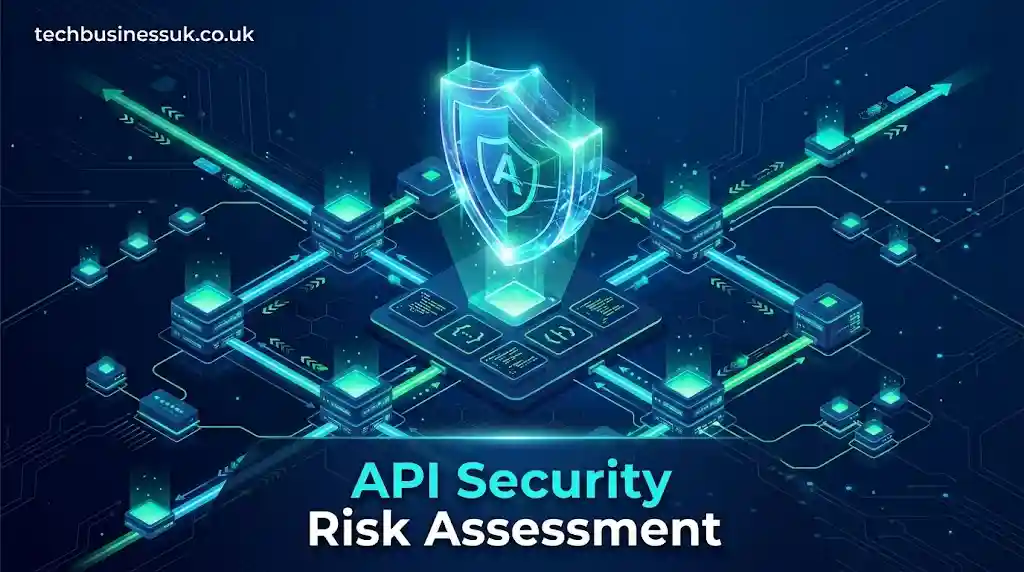
security risk assessment
Your API passed every functional test. It has been in production for a year, handling real traffic without incident. Then a routine audit reveals an endpoint nobody remembers building, exposing customer data to anyone who finds the URL—and no one can say how long it has been there.
This is exactly the gap a proper security risk assessment exists to close. Most engineering teams test whether their API works; far fewer systematically assess what happens when it is attacked, misused, or simply forgotten about.
Applying a security risk assessment specifically to your API surface is not a compliance formality—it is the structured process that turns “we think our APIs are secure” into “we know exactly where our exposure sits, and why.”
┌────────────────────────────────────────────────────────┐
│      Step 1: Asset Identification & Inventory          │
│      (Public, Private, Partner & Shadow APIs)          │
└───────────────────────────┬────────────────────────────┘
                            │
                            ▼
┌────────────────────────────────────────────────────────┐
│      Step 2: Threat Modeling & Vulnerability ID        │
│      (OWASP Top 10, IAM Gaps, Weak Access Controls)    │
└───────────────────────────┬────────────────────────────┘
                            │
                            ▼
┌────────────────────────────────────────────────────────┐
│      Step 3: Risk Scoring & Financial Exposure         │
│      (Qualitative Matrix, CVSS v4, ALE / SLE / ARO)     │
└───────────────────────────┬────────────────────────────┘
                            │
                            ▼
┌────────────────────────────────────────────────────────┐
│      Step 4: Remediation & Defense-in-Depth            │
│      (Zero Trust, Least Privilege, Encryption)         │
└────────────────────────────────────────────────────────┘
Essential Findings
- Targeted Focus: A security risk assessment identifies, scores, and prioritizes security exposure across your API surface—not just your general IT infrastructure.
- Continuous Discovery: Start with a real, current asset inventory; undocumented and deprecated endpoints hide the most dangerous exposure.
- Framework Standard: Use the official OWASP API Security Top 10 framework as your threat modeling backbone.
- Defensible Scoring: Score risk using Likelihood x Consequence, then apply CVSS v4 or financial metrics (ALE / SLE) to present a business case to leadership.
- Third-Party Risk: Every API integration with a third party requires its own vendor risk rating—inherited risk is real risk.
- Pipeline Integration: Risk assessment is not a one-time audit; it must run continuously alongside your CI/CD pipeline using modern API testing tools.
What Is a Security Risk Assessment for APIs?
A security risk assessment is a structured process for identifying, evaluating, and prioritizing security exposure across a system. When applied to APIs specifically, it treats every endpoint, integration, and data flow as a distinct asset with its own risk profile—rather than assuming general network controls offer sufficient protection.
This distinction is vital. APIs expose application logic and raw database records directly, bypassing the UI layers and input friction that protect traditional web interfaces. API security vulnerabilities differ significantly from general IT infrastructure flaws. Traditional network scans often miss API-specific failure modes like Broken Object Level Authorization (BOLA), unrestricted resource consumption, and shadow endpoints.
Step 1: API Asset Inventory and Discovery
You cannot assess the risk of an API you do not know exists. Incomplete API inventory remains one of the largest unaddressed sources of real exposure in production systems.
Establishing a thorough asset identification and inventory requires looking beyond your documented, public-facing routes:
- Deprecated Versions: Deployed API versions that are technically still reachable despite being officially retired.
- Internal Microservices: Private APIs that are not exposed publicly but remain accessible across internal network segments.
- Shadow IT Proliferation: Endpoints created during rapid development sprints or testing that were never formally tracked, cataloged, or decommissioned.
The Discovery Workflow
- Run automated endpoint discovery to scan active production traffic and cloud infrastructure.
- Cross-reference discovered endpoints against official API documentation (OpenAPI/Swagger) to flag untracked gaps.
- Assign an explicit ownership record to every API—an unowned endpoint will not receive critical security patches.
Step 2: Threat Modeling Your API Surface
Once inventory is established, apply structured threat modeling techniques to evaluate how each asset could realistically be exploited.
Because standard web application frameworks do not map cleanly onto programmatic interfaces, the OWASP API Security Top 10 provides the industry-standard threat modeling baseline.
As detailed in our dedicated guide on API security testing, threat modeling involves systematically inspecting each endpoint against core vulnerability categories:
- Broken Object Level Authorization (BOLA): Does an endpoint process user-controlled IDs without verifying resource ownership?
- Broken Authentication & IAM Gaps: Are authentication tokens improperly validated, allowing credential stuffing or session forgery?
- Unrestricted Resource Consumption: Does the endpoint lack rate limits or execution quotas, exposing systems to denial-of-service?
- Broken Object Property Level Authorization: Can users read or write properties they should not access via mass assignment or excessive exposure?
Step 3: Scoring and Quantifying API Risk
Not every vulnerability requires immediate emergency patching. Scoring likelihood and business impact ensures engineering bandwidth goes toward critical exposure points.
┌─────────────────────────────────────┐
│          Qualitative Risk           │
│   (Low / Medium / High Triage)      │
└──────────────────┬──────────────────┘
                   │
                   ▼
┌─────────────────────────────────────┐
│        CVSS Technical Score         │
│     (Base Exploitability Index)     │
└──────────────────┬──────────────────┘
                   │
                   ▼
┌─────────────────────────────────────┐
│    Quantitative ALE / SLE Model     │
│   (Financial Exposure in Dollars)   │
└─────────────────────────────────────┘
Qualitative Scoring
A qualitative risk assessment uses a simple cyber risk scoring matrix to evaluate finding likelihood against consequence (Low, Medium, High, Critical). This approach works well for fast triage during active sprint cycles.
Quantitative Scoring
For high-stakes endpoints processing payment data, PII, or core business logic, a quantitative risk assessment uses mathematical formulas to translate technical flaws into financial risk:
- CVSS Scoring System: Assigns a standardized severity metric based on technical exploitability, attack vector, and data impact.
- Single Loss Expectancy (SLE): Measures the financial damage of a single security incident:
SLE = Asset Value × Exposure Factor - Annual Loss Expectancy (ALE): Estimates the expected annual financial loss by factoring in event frequency:
ALE = SLE × Annual Rate of Occurrence (ARO)
Real-World Calculation
If a customer record API endpoint housing $1,000,000 in aggregate data value has a BOLA vulnerability exposing an estimated 30% of records upon exploitation, and has an estimated 0.15 ARO:
SLE = $1,000,000 * 0.30 = $300,000ALE = $300,000 * 0.15 = $45,000
Translating a BOLA vulnerability into a $45,000 annual risk exposure gives executive stakeholders the clear financial justification needed to allocate security engineering resources.
Step 4: Remediation Strategies and Defense-in-Depth
Scored findings require concrete treatment paths rather than open-ended backlog entries:
- Risk Mitigation: Applying technical controls like rate limiting, input validation, and parameter sanitization.
- Risk Avoidance: Decommissioning legacy or unused API endpoints entirely rather than spending hours patching obsolete code.
- Risk Acceptance: Documenting low-impact findings that fall within organizational risk tolerance thresholds.
┌─────────────────────────────────────┐
│          TLS / Encryption           │
└──────────────────┬──────────────────┘
                   │
                   ▼
┌─────────────────────────────────────┐
│    API Gateway & WAF Rate Limits    │
└──────────────────┬──────────────────┘
                   │
                   ▼
┌─────────────────────────────────────┐
│    Zero Trust Identity Context      │
└──────────────────┬──────────────────┘
                   │
                   ▼
┌─────────────────────────────────────┐
│ Least-Privilege Scoped Authorization│
└─────────────────────────────────────┘
Mitigation is best implemented through a defense-in-depth architecture:
- Principle of Least Privilege: Restrict API tokens, scopes, and database connections strictly to required permissions.
- Zero Trust Architecture: Validate and authorize every request independently, regardless of network location.
- Automated Vulnerability Scanning: Integrate dynamic AST scans and specialized API testing tools into your deployment pipelines.
API Compliance Alignment
Most production APIs process regulated data. Mapping risk assessment findings to established compliance frameworks ensures continuous audit readiness:
| Framework | API Security Requirement |
|---|---|
| SOC 2 Compliance Readiness | Requires documented proof of logical access controls, token validation, and API transaction logging. |
| GDPR DPIA | Mandates Data Protection Impact Assessments for APIs processing personal data at scale to verify authorization controls. |
| PCI DSS Compliance | Enforces strict technical controls, data encryption, and authorization checks on endpoints touching payment flows. |
Third-Party and Vendor API Risk
Enterprise applications depend heavily on external webhooks, payment gateways, and data enrichment APIs. Third-party risk management (TPRM) must extend to every external integration.
Vulnerabilities or downtime on an external provider’s end become inherited risk the moment your application relies on their payloads. Assign every significant external integration a formal vendor risk rating based on the provider’s security track record, payload sensitivity, and system availability dependencies.
Case Study: An Unassessed Legacy Endpoint Breach
A fintech organization conducted regular penetration testing and automated vulnerability scanning, but only against documented endpoints. A v1 API version—superseded over a year prior but never decommissioned—remained live and accessible on production infrastructure.
   [ Attacker Reconnaissance ]
                │
                ▼
   ┌─────────────────────────┐     Excluded from
   │ Legacy API (v1)         │ ◄─── Asset Inventory
   │ (Unmonitored Endpoint)  │     & Risk Scans
   └────────────┬────────────┘
                │
                │ Exploits Missing
                │ Authorization Checks (BOLA)
                ▼
   ┌─────────────────────────┐
   │ Customer Database       │ ───► Data Breach Event
   └─────────────────────────┘
An attacker discovered the legacy endpoint through routine reconnaissance. Because the endpoint lacked authorization updates applied to the v2 release, the attacker executed a BOLA exploit to harvest user transaction records.
The Takeaway: Threat modeling and scoring methodologies are only as effective as the asset inventory feeding them.
Assessment Cadence Decision Matrix
Because API surfaces change with every code release, risk assessments must run on an ongoing schedule:
| Trigger Scenario | Reassessment Cadence | Primary Focus Area |
|---|---|---|
| New API Endpoint / Major Release | Pre-deployment | Threat model new attack surfaces before public exposure. |
| Third-Party Integration Added | Integration time & Quarterly | Evaluate inherited vendor risk and data handling. |
| Routine Security Posture Check | Quarterly | Catch configuration drift and unmapped inventory gaps. |
| Regulatory Audit Cycle | Annually / Biannually | Validate framework compliance (SOC 2, PCI DSS). |
| Post-Incident Response | Immediate | Reassess affected systems and adjacent endpoint architecture. |
Frequently Asked Questions
What is a security risk assessment for APIs?
It is a structured framework for discovering, evaluating, and prioritizing security exposure across an organization’s API ecosystem—combining asset inventory, API-specific threat modeling, and scoring methodologies to guide remediation.
How does API risk assessment differ from general IT risk assessment?
General IT assessments focus broadly on network perimeters, server infrastructure, and endpoints. API risk assessments target vulnerabilities unique to programmatic interfaces, such as Broken Object Level Authorization (BOLA), mass assignment, and logic flaws.
How do you calculate ROSI (Return on Security Investment) for API security?
Calculate ROSI using the formula:
ROSI = (Risk Mitigation Value - Solution Cost) / Solution Cost
Where Risk Mitigation Value represents the reduction in Annual Loss Expectancy (ALE) achieved by deploying dedicated API security controls and automated API testing tools.
About the Author