You’ve built an API developers actually want to use. Traffic is climbing. Integration requests keep coming in. And you’re still giving all of it away for free, watching a genuinely valuable product generate zero direct revenue while it quietly costs you more in infrastructure every single month.
This is the exact gap API monetization strategies exist to close. An API isn’t just plumbing behind your product anymore — for a growing number of businesses, it is the product. Companies like Stripe, Twilio, and Plaid built entire businesses where the API is the primary revenue driver, not a supporting feature bolted onto something else.
This guide breaks down the real API monetization strategies businesses use today — freemium, tiered pricing, usage-based billing, subscriptions, and revenue share — how to choose between them, and the technical foundation your monetization layer actually depends on to work correctly in production.
TL;DR: API Monetization Strategies
- API monetization strategies turn API access itself into a direct revenue stream, not just supporting infrastructure.
- Five core models dominate: freemium, tiered pricing, usage-based billing, subscriptions, and revenue share.
- Usage-based billing is the fastest-growing model, but it depends entirely on accurate metering — get that wrong and you’re either underbilling or losing customer trust.
- Rate limiting and idempotency aren’t just technical concerns here — they directly enforce your pricing tiers and prevent billing errors.
- Test your monetization layer as rigorously as your core API — a metering bug is a revenue bug.
What Is API Monetization?
API monetization is the practice of generating direct revenue from access to an API, rather than treating the API purely as internal infrastructure or a free add-on to a broader product.
This represents a real shift in how businesses think about APIs. For years, most APIs existed to support something else — a mobile app, a partner integration, an internal microservice. API monetization strategies flip that relationship: the API access itself becomes the product customers pay for, whether that’s a payments API, a data enrichment API, or a messaging API.
The broader trend behind this shift is often called the “API economy” — a growing recognition that well-designed, reliable APIs carry standalone commercial value, independent of any single application built on top of them.
Why API Monetization Strategies Matter Now
The API economy has moved from niche to mainstream. What used to be a strategy reserved for a handful of platform companies is now a standard consideration for any B2B SaaS business with a genuinely useful API surface.
Usage-based revenue models are reshaping SaaS pricing broadly. Customers increasingly expect to pay for what they actually use, not a flat fee regardless of consumption — a shift that started with infrastructure providers and has spread across the SaaS landscape.
Developers are the new buyers. In a growing number of B2B purchasing decisions, a developer evaluates and adopts an API long before a procurement team ever gets involved — making self-serve, well-documented, clearly priced API access a genuine competitive advantage.
Unmonetized APIs are a real cost, not a neutral choice. Every API call consumes compute, bandwidth, and support resources. An API given away for free at meaningful scale is a cost center quietly working against your margins, whether or not anyone’s tracking it that way.
Core API Monetization Strategies
There’s no single correct model — the right choice depends on your customer base, your cost structure, and how predictable versus variable your usage patterns tend to be.
Freemium Model
How it works: A limited free tier — capped requests, limited features, or restricted rate limits — gives potential customers a genuine trial of your API before they commit to paying.
Pros: Lowers the barrier to adoption dramatically. Developers can evaluate your API’s quality and fit without a sales conversation or upfront commitment, which speeds up organic growth and word-of-mouth adoption.
Cons: Free-tier abuse is a real, recurring problem — without careful limits, some users will extract maximum value from the free tier indefinitely rather than ever converting to paid.
Best for: Developer-first products where bottom-up adoption drives growth, and where a genuinely useful free tier builds trust before asking for payment.
Tiered Pricing (Rate-Limited Tiers)
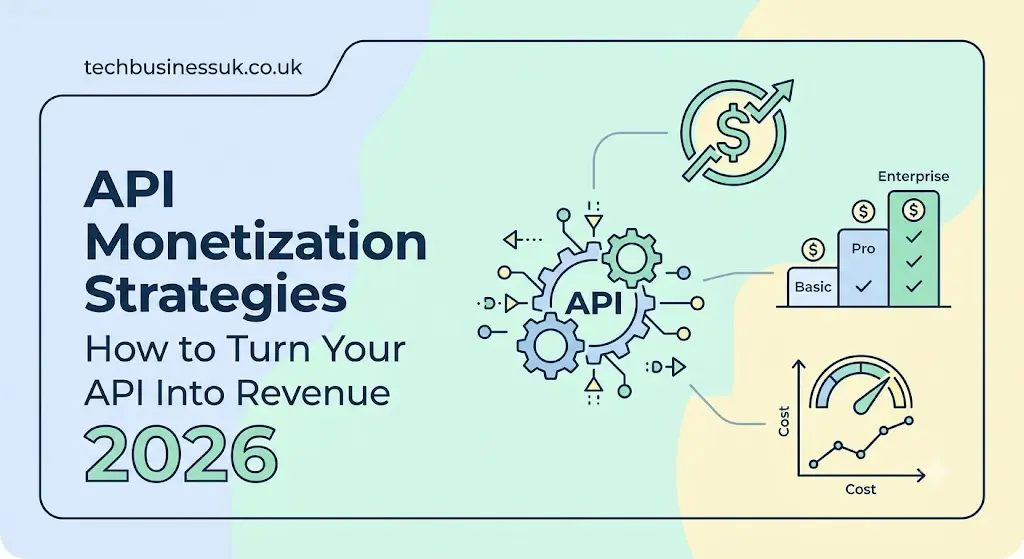
How it works: Multiple pricing tiers, each unlocking a higher rate limit, higher request volume, or additional features — Basic, Pro, Enterprise, or similar structures.
Pros: Predictable, easy-to-understand pricing for customers, and predictable revenue forecasting for your business. Customers can self-select the tier that matches their actual usage needs.
Cons: Customers sitting just below a tier boundary can feel penalized, and getting tier boundaries wrong (too generous or too restrictive) can either cannibalize revenue or frustrate legitimate users.
Best for: APIs with fairly predictable usage patterns across customer segments — most B2B SaaS APIs fit this model reasonably well.
Pay-As-You-Go / Usage-Based Billing
How it works: Customers are billed based on actual consumption — per API call, per unit of data processed, per transaction — rather than a flat recurring fee.
Pros: Directly aligns cost with value delivered. Customers only pay for what they actually use, which removes a major adoption barrier for smaller customers while still capturing revenue proportionally from your highest-usage accounts.
Cons: Revenue becomes inherently less predictable month to month, and this model places enormous weight on metering accuracy — if your usage tracking is even slightly wrong, you’re either leaving revenue on the table or overbilling customers, both of which erode trust.
Best for: APIs with highly variable usage across customers — this has become the dominant model among modern infrastructure and AI-adjacent API providers specifically because it scales naturally with customer value.
Subscription-Based Access
How it works: A flat recurring fee grants access to the API, generally without directly metering individual calls, sometimes with a soft usage cap.
Pros: Maximum revenue predictability, and simplicity for both your business and your customers — no surprise bills, no complex usage tracking required on the customer side.
Cons: Doesn’t scale naturally with usage — a customer making ten times the calls of another customer on the same plan generates identical revenue, which can under-monetize your highest-value accounts.
Best for: APIs where usage doesn’t vary wildly between customers, or where simplicity and billing predictability matter more than perfectly capturing usage-based value.
Transaction-Based (Revenue Share) Pricing
How it works: Rather than charging for API access itself, you take a percentage of the value flowing through each transaction the API facilitates — the model payment APIs like Stripe use.
Pros: Naturally aligns your revenue with your customer’s success — you only earn more when they’re doing more actual business through your API.
Cons: Only works when your API sits directly in a transactional flow with a clear monetary value attached to each call; doesn’t apply to most data or utility APIs.
Best for: Payments, marketplaces, and any API that directly facilitates a monetary transaction between parties.
API Monetization Strategies Comparison Table
| Strategy | Revenue Predictability | Alignment with Usage | Implementation Complexity | Best For |
|---|---|---|---|---|
| Freemium | Low (free tier) | Partial | Low–Medium | Developer-first adoption growth |
| Tiered Pricing | High | Moderate | Medium | Predictable B2B usage segments |
| Usage-Based | Low–Medium | High | High | Highly variable customer usage |
| Subscription | High | Low | Low | Simple, predictable access needs |
| Transaction-Based | Medium | High | High | Payments, marketplaces |
The Technical Foundation Monetization Depends On
This is the part that gets underestimated constantly: every monetization strategy above is only as good as the technical systems enforcing it. A brilliant pricing model built on inaccurate metering, weak rate limiting, or unreliable billing logic will lose revenue and customer trust regardless of how well the pricing itself was designed.
Rate limiting enforces your tiers. Tiered pricing only means anything if a Basic-tier customer is actually restricted to Basic-tier limits. This enforcement typically happens through the exact kind of traffic-shaping mechanism covered in our guide on the leaky bucket algorithm — smoothing and capping request rates according to each customer’s paid tier, consistently and reliably.
Idempotency prevents billing errors, not just duplicate orders. Usage-based billing depends on accurately counting each billable event exactly once. If a retried request gets counted twice due to a network hiccup, you’ve either overbilled a customer or double-counted usage internally — this is precisely the failure mode covered in our guide on idempotent APIs, and it applies directly to metering and billing logic, not just payment processing.
Metering and enforcement typically live at the gateway layer. Centralizing usage tracking, tier enforcement, and rate limiting at the API gateway — rather than scattering that logic across individual backend services — keeps your monetization enforcement consistent and auditable, and avoids the risk of one service enforcing limits differently than another.
Choosing the Right API Monetization Strategy for Your Business
Start with a genuinely honest look at your usage patterns. If customer usage varies enormously — some customers making a handful of calls, others making millions — usage-based or tiered pricing captures that variance far better than a flat subscription. If usage is relatively uniform across your customer base, a simple subscription may be both easier to implement and easier for customers to understand.
Consider your customer base’s sophistication and expectations too. Developer-first, bottom-up adoption tends to favor freemium entry points. Enterprise sales-led customers are often more comfortable with tiered or custom-negotiated pricing, and less concerned with a free tier existing at all.
Many successful API businesses combine models rather than picking just one — a freemium entry tier for initial adoption, transitioning into tiered or usage-based pricing as customers scale up. This hybrid approach captures the adoption benefits of freemium while still monetizing meaningfully at higher usage levels.
Common API Monetization Mistakes
Underpricing based on infrastructure cost alone, ignoring the value delivered. Pricing purely off your compute and bandwidth costs often dramatically undercharges for the actual business value your API provides to a paying customer.
Metering inaccurately and finding out from angry customers. If your usage tracking has bugs, customers discover it through unexpected bills long before your team notices internally — a metering bug is effectively a trust bug.
No graceful degradation when a customer hits their limit. A customer unexpectedly cut off mid-integration, with no warning and no clear upgrade path, is far more likely to churn than one who receives a clear warning and an easy upgrade option before hitting a hard wall.
Ignoring the enforcement layer until it’s already a problem. Designing an elegant pricing model without validating that your rate limiting and metering can actually enforce it correctly is a common and expensive oversight — one that usually surfaces during a real traffic spike, not during design review.
How to Implement Usage-Based Billing
A practical implementation generally follows this shape:
- Define your billable event — an API call, a unit of data processed, a completed transaction — whatever unit genuinely reflects value delivered to the customer.
- Meter usage reliably, typically at the gateway or a dedicated metering service, recording each billable event exactly once — this is where idempotency protections matter directly.
- Aggregate usage over a billing period, summing metered events per customer.
- Generate and send invoices based on aggregated usage, ideally with usage visibility available to the customer before the invoice arrives, not just after.
- Handle edge cases explicitly — partial billing periods, mid-cycle plan changes, refunds for metering errors.
For a detailed, production-grade reference on this exact process, Stripe’s usage-based billing documentation walks through metering, aggregation, and invoicing in real implementation detail — notably, Stripe’s own guidance explicitly recommends idempotency keys when reporting usage, specifically to prevent the same usage event from being counted twice due to retries.
Testing Your Monetization Layer
A metering bug is a revenue bug, and it deserves the same rigor as any other production-critical system — arguably more, since it directly affects both your revenue and your customers’ trust.
What to test explicitly:
- Tier enforcement — confirm a customer on a given tier is actually restricted to that tier’s limits, not just that the pricing page says they should be
- Metering accuracy under retries — confirm a retried request doesn’t get counted as two billable events
- Billing period boundaries — confirm usage is correctly attributed to the right billing cycle, especially around midnight/month-end edge cases
- Plan upgrade and downgrade behavior — confirm a mid-cycle plan change correctly prorates and re-enforces the new tier’s limits
Our guide to API Testing Tools covers the kind of rigorous test-case design needed to validate exactly these scenarios — tier boundaries, metering accuracy, and billing edge cases — before a monetization bug becomes a revenue-impacting incident discovered by an angry customer instead of your own test suite.
Real-World Example: A Monetization Bug That Cost Real Revenue
Consider a common scenario: a data API priced entirely on usage-based billing had a subtle bug in its metering logic. Under normal, steady traffic, the bug never surfaced. But during periods of network instability, a portion of retried requests were being metered twice — the underlying API call succeeded once, but the usage-tracking system recorded it as two billable events due to a missing idempotency check in the metering pipeline specifically.
The result: a meaningful subset of customers were quietly overbilled over several billing cycles before the pattern was noticed — not through internal monitoring, but through customer complaints about usage numbers that didn’t match their own request logs. The company had to issue retroactive credits, investigate and fix the metering pipeline, and rebuild trust with affected accounts, all stemming from a gap that had nothing to do with the pricing model itself and everything to do with the technical enforcement underneath it.
The lesson: the most elegant monetization strategy in the world is only as trustworthy as the metering and billing logic enforcing it — and that logic needs the same idempotency and testing discipline as any other production-critical part of your API.
Decision Matrix: Which Model Fits Your API?
| Scenario | Recommended Strategy | Why |
|---|---|---|
| Developer-first product, bottom-up adoption | Freemium → Tiered | Lowers adoption friction, converts naturally as usage grows |
| Predictable, segment-based B2B usage | Tiered Pricing | Simple, predictable, matches natural customer segments |
| Highly variable usage across customers | Usage-Based Billing | Captures value proportionally without penalizing small customers |
| Payments, marketplaces, transactional APIs | Transaction-Based | Aligns revenue directly with customer transaction value |
| Enterprise customers wanting billing simplicity | Subscription | Predictable for both parties, minimal billing complexity |
Conclusion
API monetization strategies turn a genuinely valuable product into a genuinely functioning revenue stream — but only when the pricing model is backed by technical systems that actually enforce it correctly. Freemium, tiered pricing, usage-based billing, subscriptions, and revenue share each fit different businesses and usage patterns; there’s no universally “best” choice, only the one that matches your customers’ actual behavior.
Choose your pricing model deliberately, but treat the rate limiting, idempotency, and metering infrastructure underneath it as equally important — because a pricing strategy that can’t be enforced accurately isn’t really a pricing strategy at all, it’s a source of future customer disputes.
Whether you’re validating tier enforcement or confirming your metering never double-counts a retried request, having the right API Testing Tools in your workflow is what turns a monetization strategy from a pricing-page promise into something your systems actually deliver correctly, every time.
Frequently Asked Questions
What are the main API monetization strategies? The core strategies are freemium, tiered pricing, usage-based billing, subscription-based access, and transaction-based revenue share, each aligning differently with how customer usage varies and how predictable revenue needs to be.
What is the most common API monetization model for SaaS businesses? Usage-based billing and tiered pricing are the two most widely adopted models for modern SaaS APIs, often combined with a freemium entry tier to lower initial adoption friction.
Why does rate limiting matter for API monetization? Rate limiting is what technically enforces pricing tiers, ensuring customers on a given plan are actually restricted to that plan’s usage limits rather than the pricing structure existing only on paper.
How does idempotency relate to API monetization? Idempotency prevents the same billable usage event from being counted more than once due to network retries, which is essential for accurate metering in usage-based billing models.
What’s the difference between tiered pricing and usage-based billing? Tiered pricing charges a fixed rate for a defined usage tier with set limits, while usage-based billing charges customers based on their actual, granular consumption, scaling revenue directly with usage rather than in fixed tier steps.
How should I test a usage-based billing system? Test metering accuracy under retry and network failure conditions, tier and plan boundary enforcement, correct attribution of usage to billing periods, and behavior during mid-cycle plan changes.
About the Author