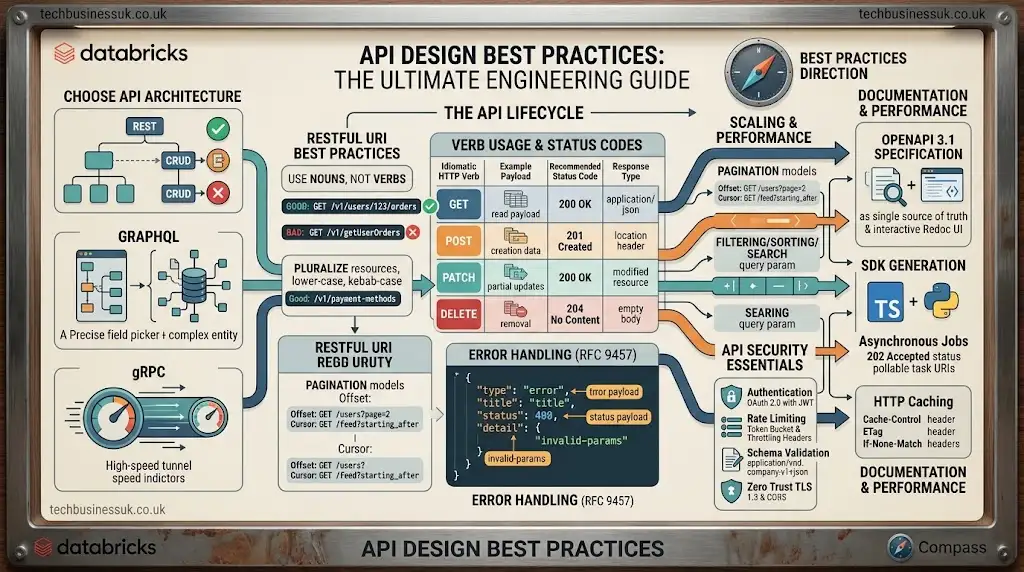
Implementing modern REST API design best practices is essential as enterprise software architecture reaches a critical tipping point. Over the past decade, engineering teams aggressively dismantled monolithic systems in favor of microservices, distributed cloud backends, and lightweight REST endpoints.
However, as documented in modern engineering coverage across platforms like BetterThisTechs and BetterThisWorld (now covered by a central BetterThisTechs News hub), this architectural shift introduced a severe operational tax: API sprawl. Organizations found themselves managing thousands of unmapped, redundant, and unsecured endpoints without unified governance. Comprehensive API governance frameworks and API governance models are now required to maintain visibility.
Today, enterprise technology is undergoing an even larger transformation: the shift from deterministic software to autonomous artificial intelligence, Large Language Models (LLMs), and predictive machine learning (ML) systems.
Yet, as development teams rush to build RAG (Retrieval-Augmented Generation) pipelines, train custom neural networks, and integrate vector databases, they are repeating the exact same architectural mistake. They are moving directly from API sprawl to data sprawl.
While API sprawl fragments your application communication layer, data sprawl silently corrupts your data science workflows, corrupts machine learning model performance, and introduces massive compliance vulnerabilities.
This comprehensive guide breaks down the transition from API sprawl to data sprawl, explores why legacy databases fail to manage non-deterministic AI pipelines, and demonstrates how implementing a modern Feature Store architecture—such as the open-source Feast Feature Store or the Databricks Feature Store—provides the ultimate governance layer for enterprise Data Science and MLOps.
1. Choosing the Right API Architecture (REST, GraphQL, gRPC)
Choosing the right API architecture is crucial, as each offers different benefits and trade-offs depending on your specific use case. The three most common choices are REST, GraphQL, and gRPC. When designing interfaces for AI agents, engineering leads are also comparing MCP vs API for efficient model context exchange.
RESTful APIs: When to use REST for stateless CRUD operations and public-facing developer ecosystems.
RESTful APIs are the industry standard for most public-facing web services and CRUD (Create, Read, Update, Delete) operations. They use standard HTTP methods like GET, POST, PUT, and DELETE to manage resources identified by URIs. Use REST when you need a widely supported, stateless, and cacheable API for a diverse developer ecosystem.
GraphQL: Solving over-fetching/under-fetching for mobile and client-driven web apps.
GraphQL is a powerful alternative to REST, designed to give clients precise control over the data they receive. It allows clients to request exactly what they need in a single query, eliminating the issues of over-fetching (getting too much data) and under-fetching (getting too little data). GraphQL is ideal for complex, data-heavy applications and mobile apps where bandwidth is a concern.
gRPC & Protocol Buffers: High-performance, low-latency inter-microservice communication.
gRPC is a high-performance RPC (Remote Procedure Call) framework that uses Protocol Buffers (protobuf) for binary serialization, making it much faster and more efficient than text-based formats like JSON. It’s an excellent choice for internal microservice communication where performance and low latency are critical. gRPC supports features like bi-directional streaming, which is useful for real-time applications.
Comparative Summary Matrix:
| Protocol | Best Use Case | Key Advantage | Main Trade-off |
|---|---|---|---|
| REST | Public Web APIs, CRUD | Universal standard, caching | Payload over-fetching |
| GraphQL | Complex UIs, Mobile Apps | Precise client queries | Query complexity management |
| gRPC | Internal Microservices | Binary serialization, speed | Browser compatibility limits |
2. Core RESTful URI & API Naming Conventions
Targeting featured snippets on “API naming conventions” and “REST URL best practices” starts with understanding the basic rules.
Use Nouns, Not Verbs in Endpoints
API endpoints should represent resources, which are best described by nouns. For example, use /users instead of /getUsers. The action is implied by the HTTP method (GET, POST, etc.), so the URI itself should be a collection or a specific instance of a resource.
Examples:
GET /v1/users/123/orders(Good: clearly identifies the resource “orders” belonging to a specific “user”)GET /v1/getUserOrders?userId=123(Bad: uses a verb “getUserOrders” in the endpoint, mixing action and resource)
Pluralization & Structural Consistency
Keep resource names plural for consistency (e.g., /products, /invoices). Use kebab-case (hyphens) for multi-word paths, avoiding camelCase or underscores. This is generally preferred in web URLs because it’s easier to read. Keep URIs lowercase and omit trailing slashes to avoid creating multiple endpoints for the same resource.
3. Standardizing HTTP Methods & Response Codes
Standardizing HTTP methods and response codes is vital for creating a predictable and user-friendly API.
Idiomatic HTTP Verb Usage
Each HTTP method should be used according to its defined purpose. Using them correctly ensures that your API is intuitive and follows web standards.
- GET: Read a resource or a collection of resources. GET requests should be safe (no side effects) and idempotent (can be made multiple times with the same result).
- POST: Create a new resource or execute a non-resource action, like a search. POST is neither safe nor idempotent.
- PUT: Replace an existing resource completely. PUT requests should be idempotent, meaning subsequent identical requests should have the same effect as the first one.
- PATCH: Partially modify an existing resource. PATCH is useful when you only need to update specific fields. It can be made idempotent, but it’s not guaranteed by the standard.
- DELETE: Remove a resource. Like PUT and GET, DELETE should be idempotent, so deleting the same resource twice should not result in an error the second time.
Correct HTTP Status Code Hierarchy
Use the appropriate HTTP status codes to communicate the outcome of a request to the client.
- 2xx (Success): 200 OK (request successful), 201 Created (new resource created, should include a
Locationheader), 204 No Content (request successful, but no response body). - 4xx (Client Errors): 400 Bad Request (generic client error), 401 Unauthorized (authentication failed or not provided), 403 Forbidden (authenticated but lacks permission), 404 Not Found (resource not found), 429 Too Many Requests (rate limit exceeded).
- 5xx (Server Errors): 500 Internal Server Error (generic server-side error), 503 Service Unavailable (server is temporarily unavailable).
4. Standardized API Error Handling (RFC 7807 / RFC 9457)
Show developers how to structure error payloads that are machine-readable and developer-friendly. Avoid returning unhandled stack traces or generic { error: "failed" } objects. Standardized errors, such as those defined by RFC 7807 and API error handling, provide a clear, structured way to convey error information.
Why Standardized Errors Matter
Standardized errors make it easy for clients to programmatically handle errors and for developers to quickly diagnose problems. By providing a structured error format, you provide crucial information that can save hours of debugging time and help build a more robust integration.
5. API Pagination and Filtering, Sorting, and Search
Addressing performance for large datasets is a crucial part of building an efficient API. Implementing features like pagination, filtering, and sorting ensures that clients can effectively manage and navigate large amounts of data.
Pagination Models:
- Offset-Based:
GET /users?page=2&limit=20. Best for UI page navigation where users need to jump to specific pages. It’s simple to implement but can become inefficient for very large offsets. - Cursor-Based:
GET /feed?starting_after=obj_123&limit=20. Best for continuous scroll, real-time data, and scaling large tables. It uses a cursor (a pointer to a specific item) to retrieve the next set of results, which is more efficient for large datasets and less susceptible to data changes during pagination.
Filtering Syntax: Use clear query parameters.
Example: GET /products?category=electronics&status=in_stock. Query parameters are a clean and easy way to implement filtering in your API. Ensure that parameter names are consistent and self-explanatory.
Sorting Syntax: Support comma-separated key ordering.
Example: GET /orders?sort=-created_at,status. In this example, the - sign before created_at denotes descending order, while status is sorted in ascending order. This simple syntax is flexible and easy for clients to use.
6. API Versioning Strategies
Goal: Help teams navigate breaking changes without disrupting existing clients. When your API needs to evolve, versioning allows you to make breaking changes while still supporting older versions for a period of time. Adopt established API versioning strategies to maintain backward compatibility.
URL Path Versioning (Recommended for Public APIs):
Header/Content Negotiation Versioning:
Accept: application/vnd.company.v1+json. This approach uses the Accept header to specify the API version. It keeps the URI clean and allows for more granular version control. However, it can be slightly more complex to implement and might have issues with some client frameworks or caching layers.
Deprecation Management:
Using HTTP headers (Sunset: Wed, 11 Nov 2026 00:00:00 GMT and Deprecation: true) to inform developers ahead of breaking updates. This is an essential part of a mature API lifecycle. Providing clear deprecation notices and a timeline helps developers manage the transition to a newer version.
7. API Security Essentials
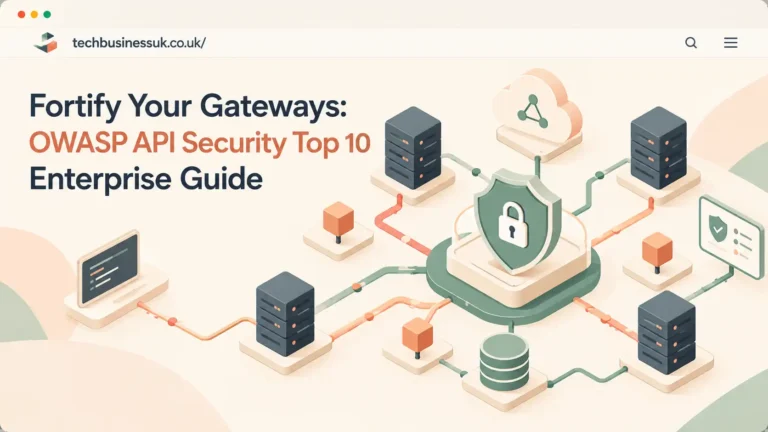
API security is critical, and failing to secure your API can lead to serious breaches and data theft. Provide actionable security checklists for backend developers. Securing advanced components like a FastAPI WebSocket requires specialized attention beyond traditional HTTP.
Authentication vs Authorization: Enforce OAuth 2.0 and OpenID Connect (OIDC) with short-lived JWTs.
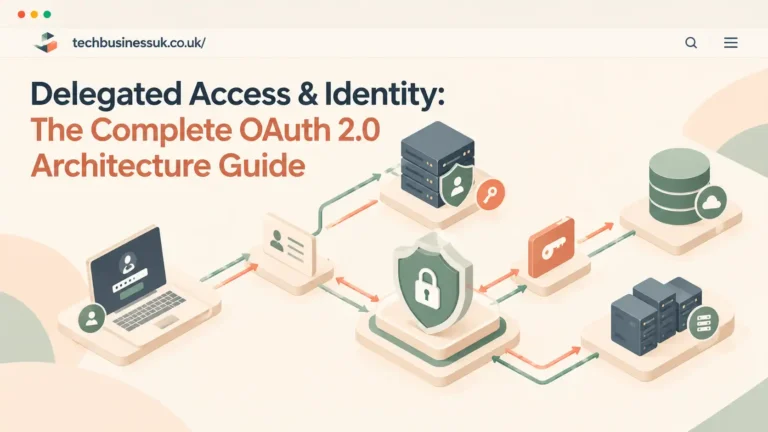
OAuth 2.0 is the industry standard for authorization, while OIDC adds an identity layer on top of it. It is essential to understand the distinction between authentication vs authorization to implement secure access control. Together, they provide a secure and flexible way to manage user access to your API using standard API authentication methods and short-lived Bearer tokens. Utilizing a Nonce during the authentication handshake can further prevent replay attacks.
API Rate Limiting & Throttling: Prevent abuse using Token Bucket / Leaky Bucket algorithms.
API rate limiting prevents abuse and ensures that your API remains available to all users. Throttling is a form of rate limiting that temporarily slows down a client’s requests. You should always return standard headers like Retry-After to inform clients about their rate limits. An API Gateway is the standard infrastructure component for enforcing these limits and managing traffic. Utilizing a specific leaky bucket algorithm provides smooth traffic shaping.
Input Validation & Sanitization: Enforce strict payload schemas.
Protect against SQL injection, XSS, and parameter tampering by strictly validating all client input. Enforce specific schemas for JSON payloads, use parameterized queries for database interactions, and sanitize all user-generated content before displaying it. When integrating LLMs, teams must implement ai guardrails testing and prompt injection prevention to sanitize untrusted user inputs before they reach the model.
Zero Trust Transport: Force HTTPS/TLS 1.3 everywhere and configure strict CORS policies.
Always use HTTPS to encrypt all communication between the client and the server. TLS 1.3 is the latest and most secure version of the TLS protocol. Configure strict Cross-Origin Resource Sharing (CORS) policies to control which domains are allowed to access your API from a browser, reinforcing modern API Gateway Security postures.
8. Modern Documentation & Developer Experience (DX)
Developer experience (DX) is a huge factor in the adoption and success of your API. Modern documentation tools and practices can make a world of difference.
OpenAPI Specification 3.1: Treat the OpenAPI spec as the single source of truth.
Spec-First Development. The OpenAPI Specification (formerly Swagger) is a standard for defining and documenting APIs. By treating your OpenAPI spec as the single source of truth, you ensure that your documentation is always accurate and up-to-date. This approach also allows you to automate tasks like code generation and testing. Treat all generated artifacts with strict compliance testing to ensure standards adherence.
Interactive Docs: Utilize tools like Swagger UI, Redoc, or Fern.
Provide interactive API playgrounds. Interactive documentation allows developers to try out your API directly from their browser, which is an invaluable feature for exploration and testing. Tools like Swagger UI and Redoc can generate these interactive docs automatically from your OpenAPI specification.
SDK Generation & Mock Servers: Auto-generate client SDKs.
Auto-generate client SDKs (TypeScript, Python, Go) and mock environments directly from the OpenAPI schema. This can save developers a huge amount of time and effort by providing pre-built client libraries and a mock server for local development.
9. API Performance Optimization & Caching
Performance optimization is key to providing a fast and responsive API. API monitoring and caching are two powerful techniques that can significantly improve your API’s performance.
API Monitoring and tracking
Implement comprehensive API monitoring to track uptime, error rates, and round-trip latency, ensuring visibility into backend bandwidth usage. When testing generative AI integrations, rely on a specific LLM API testing guide to validate both non-functional performance and functional model accuracy.
HTTP Caching: Leverage Cache-Control, ETag, and If-None-Match headers.
HTTP caching allows clients and intermediary proxies to cache API responses, reducing the load on your server and improving response times. Use headers like Cache-Control to specify caching rules, and ETag and If-None-Match for conditional requests to only send a full response body when the resource has changed. These web performance tech techniques are essential for scalable web architecture.
API Testing Tools and Automation
Backend teams must go beyond api testing tools to include comprehensive API security testing in their release pipelines. Adopt a pipeline architecture that mandates contract testing—such as consumer-driven contract testing—to prevent breaking changes before deployment.
Summary Checklist: API Design Best Practices
A highly scannable target for visual snippets and social sharing. This checklist summarizes the key points discussed in this guide.
- [x] Use plural nouns for resource endpoints (/accounts).
- [x] Align HTTP methods directly with resource actions.
- [x] Return standard HTTP status codes and RFC 9457 error payloads.
- [x] Implement cursor-based pagination for large data streams.
- [x] Version APIs in the URL path for clear contract boundaries.
- [x] Protect all endpoints with OAuth 2.0, SSL, and rate limiting.
- [x] Maintain an updated OpenAPI 3.1 specification file.
Frequently Asked Questions (FAQs)
Capture Long-Tail Search Queries and Google “People Also Ask” (PAA) Boxes. This section provides answers to common questions about API design.
Q1: Should I use camelCase or snake_case in JSON response keys?
Answer: While both are used, camelCase (userId) is widely standard in JavaScript/TypeScript ecosystems, whereas snake_case (user_id) is common in Python/Ruby. The key is strict consistency across all endpoints. Engineering leads often debate FastAPI vs Flask depending on performance needs and specific language ecosystem conventions.
Q2: When should I choose GraphQL over REST?
Answer: Choose GraphQL when building complex, client-driven UIs (like mobile apps) where network requests need to be minimized and clients require fine-grained control over payload fields. We provide a detailed breakdown in our GraphQL vs REST vs gRPC comparison.
Q3: What is the difference between PUT and PATCH?
Answer: PUT replaces the target resource entirely with the request payload. PATCH applies partial modifications to the resource.
Brief Explanation of Key Technical Jargons
Understanding key technical terms is vital for any developer or engineering manager. This glossary provides simple explanations for the concepts discussed in this guide.
- JWT (JSON Web Token): An open standard for securely transmitting information between parties as a JSON object. JWTs are often used for authentication and authorization in APIs.
- Stateless: A property of RESTful APIs where each request from a client to a server must contain all the information necessary to understand and complete the request. The server does not store any client context between requests.
- CRUD (Create, Read, Update, Delete): The four basic functions of persistent storage. RESTful APIs typically map HTTP methods (POST, GET, PUT/PATCH, DELETE) to CRUD operations.
- Serialization: The process of converting an object into a format that can be easily stored or transmitted. gRPC uses binary serialization for better performance than text-based formats like JSON.
- Idempotent: An operation that can be performed multiple times without changing the result beyond the initial application. HTTP methods like GET, PUT, and DELETE are designed to be idempotent.
- Rate Limiting: A technique to control the rate at which a client can make requests to an API, to prevent abuse and ensure fair usage.
- OAuth 2.0 & OIDC: OAuth 2.0 is an industry-standard framework for authorization, while OIDC is an authentication layer on top of it. They provide secure user access to APIs.
- OpenAPI Specification: A standard for defining and documenting RESTful APIs. It provides a formal definition of an API that can be used for various purposes, including code generation and interactive documentation.
- BOLA (Broken Object Level Authorization): An API security risk where an API fails to validate if the user requesting a specific resource (via an ID in the URI) is actually authorized to access it. Automated BOLA detection is essential for modern security testing.
About the Author