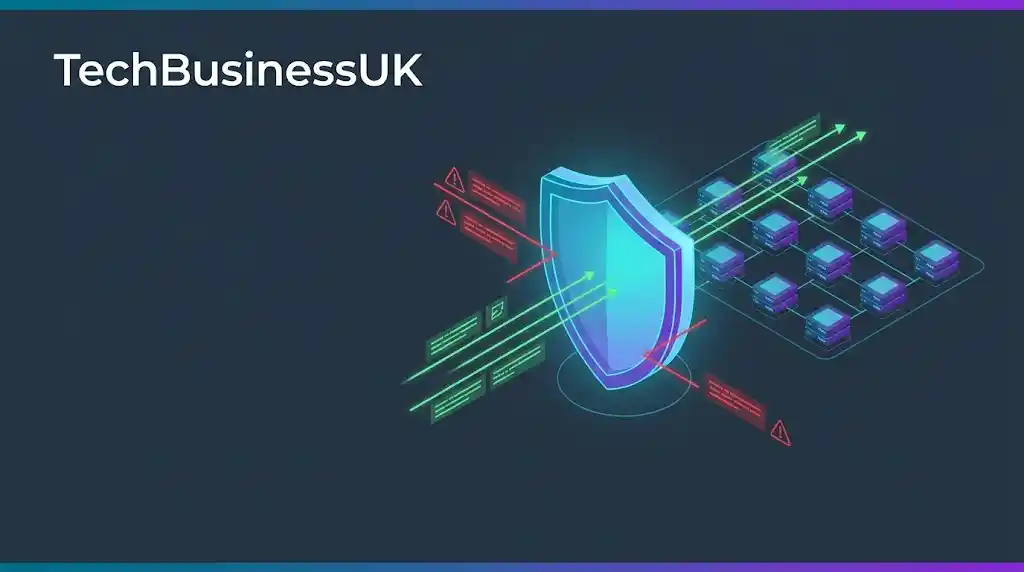
A fintech company ships a payment microservice behind a high-throughput routing proxy. Every automated unit test passes, SSL certificates are active, and an OAuth server issues valid JWT tokens. Within three weeks of launch, an attacker crafts an HTTP request, swaps a user ID in the request URI, and exfiltrates thousands of sensitive billing records — all while the proxy forwards every request with a clean HTTP 200 OK. Standard infrastructure tools route traffic smoothly, but they fail to detect deep contextual abuse. Implementing robust API gateway security is the only way to stop authorized users from executing unauthorized business logic at the edge.
====================================================================================================
TL;DR: Standard API gateways route traffic and terminate TLS, but they do not stop context-level
attacks. Dedicated API gateway security enforces schema validation, fine-grained authorization,
and adaptive rate limiting at the perimeter. Combining inline API gateway security with continuous
automated verification blocks BOLA, credential stuffing, and data leakage before requests reach
your backend microservices.
====================================================================================================Why Traditional Firewalls Fail at the API Perimeter
Legacy web application firewalls (WAFs) and Layer 4/Layer 7 firewalls were built for static web pages. They inspect incoming traffic for signatures like SQL injection strings, cross-site scripting (XSS) payloads, and known bad IP addresses. However, modern API attacks rarely look like standard malicious traffic.
L4/L7 Firewalls vs. Deep Packet API Inspection
Standard firewalls inspect HTTP headers and basic packet metadata. They check if a client has exceeded a simple request count or if a payload contains recognizable attack strings.
In contrast, modern API attacks rely on valid HTTP calls carrying manipulated parameters. An attacker targeting a REST or GraphQL endpoint does not need to inject malicious scripts. They simply change a numeric ID from /users/101/profile to /users/102/profile.
To an L4/L7 firewall, both requests look identical. A dedicated API gateway security layer inspects the full state, user claim context, and payload schema to evaluate intent in real time.
The Cost of Shadow APIs and Unmonitored Endpoints
Developers ship code fast. Microservices evolve, staging endpoints get exposed publicly, and old API versions remain active without security updates. These unmonitored endpoints are known as shadow APIs and zombie APIs.
Traditional firewalls cannot protect what they cannot see. Without automated shadow API discovery, unmanaged endpoints bypass your central routing rules. A robust API gateway security implementation continuously scans incoming traffic, maps unknown endpoints against your active OpenAPI specs, and blocks unverified traffic before it reaches internal services.
Core Threat Vectors Solved by API Gateway Security
Understanding the primary threat vectors targeting modern application programming interfaces is critical before deploying API perimeter security controls. The OWASP API Security Top 10 highlights vulnerabilities that bypass standard network defenses.
+-----------------------------------------------------------------------------------------------+
| ATTACK VECTOR COMPARISON                                                                      |
+-----------------------------------------------------------------------------------------------+
| Attack Type            | Standard WAF Response        | API Gateway Security Action           |
+------------------------+------------------------------+---------------------------------------+
| BOLA / IDOR            | PASS (Valid syntax & token)  | BLOCK (Subject-to-object claim mismatch)|
| Credential Stuffing    | PASS (Under IP rate limit)   | BLOCK (Device fingerprint & velocity) |
| Schema Poisoning       | PASS (Valid JSON formatting) | BLOCK (Undocumented fields rejected)  |
| Shadow API Abuse       | PASS (Standard HTTP route)   | BLOCK (Route missing from OpenAPI spec)|
+-----------------------------------------------------------------------------------------------+
Broken Object Level Authorization (BOLA) and Privilege Escalation
BOLA remains the most pervasive threat in modern software architecture. It occurs when an application fails to verify if the authenticated user has permission to access a specific data object.
While periodic API penetration testing uncovers deep authorization flaws through manual adversarial testing, inline API gateway security enforces real-time BOLA prevention at the edge by comparing token claims directly against requested URI resource identifiers.
Credential Stuffing, Botnet Abuse, and Brute Force Attacks
Automated scripts use leaked credential lists to execute login calls across thousands of residential IP addresses. Because these requests come from distributed networks, simple IP-based rate limiting fails.
Perimeter security controls analyze request velocity, user agent fingerprints, and token generation patterns. By detecting subtle traffic anomalies, the gateway triggers dynamic CAPTCHAs, challenges suspicious sessions, or throttles botnet traffic automatically.
Injection Attacks and Payload Pollution
Attackers send oversized JSON blobs, nested GraphQL queries, or malicious XML structures to exhaust server memory and execute unauthorized commands. Implementing comprehensive API threat mitigation requires the perimeter to parse and validate every incoming byte against strict memory, depth, and schema rules before passing the payload downstream.
7 Essential API Gateway Security Controls
To establish a resilient security posture, your infrastructure must enforce seven core technical controls directly at the ingress boundary.
                  +-------------------------------------------------------+
                  |               INCOMING HTTP REQUEST                   |
                  +-------------------------------------------------------+
                                              │
                                              ▼
                  +-------------------------------------------------------+
                  |             1. OpenAPI Schema Validation              |
                  +-------------------------------------------------------+
                                              │
                                              ▼
                  +-------------------------------------------------------+
                  |         2. OAuth 2.0 & ABAC Claims Check              |
                  +-------------------------------------------------------+
                                              │
                                              ▼
                  +-------------------------------------------------------+
                  |         3. Context-Aware Adaptive Rate Limit          |
                  +-------------------------------------------------------+
                                              │
                                              ▼
                  +-------------------------------------------------------+
                  |         4. Payload Sanitization & DLP Check           |
                  +-------------------------------------------------------+
                                              │
                                              ▼
                  +-------------------------------------------------------+
                  |            5. Mutual TLS (mTLS) Ingress               |
                  +-------------------------------------------------------+
                                              │
                                              ▼
                  +-------------------------------------------------------+
                  |             FORWARD TO BACKEND SERVICE                |
                  +-------------------------------------------------------+
1. Strict Schema Enforcement and Open API Specification Validation
Never allow arbitrary payloads to cross your network boundary. Your security gateway must ingest your OpenAPI/Swagger specifications and enforce OpenAPI schema validation on every incoming request.
- Reject any HTTP POST or PUT call containing unexpected payload parameters (preventing mass assignment).
- Enforce exact field data types, string length limits, regex patterns, and array bounds.
- Automatically return
HTTP 400 Bad Requestat the gateway layer, sparing backend microservices from processing malformed data.
2. OAuth 2.0, OpenID Connect, and Fine-Grained ABAC Policy Enforcement
Authenticating a user is only the first step. The gateway must perform real-time OAuth 2.0 token validation and enforce fine-grained authorization rules before routing requests internally.
Evaluating modern API authentication methods shows that static API keys and basic auth lack the granularity needed for distributed cloud systems. The gateway must inspect cryptographic JWT signatures, extract custom claims, and execute Attribute-Based Access Control (ABAC) policies to match user scopes against target routes.
3. Mutual TLS (mTLS) for East-West Microservice Encryption
Securing North-South client traffic is vital, but internal service-to-service communication requires equal protection. Implementing mutual TLS enforcement guarantees cryptographic identity across all microservice interactions.
- The gateway validates client-side X.509 certificates during the initial TLS handshake.
- Service-to-service calls utilize encrypted tunnels, enforcing a strict Zero Trust API architecture.
- Compromised internal containers cannot eavesdrop or inject malicious packets into adjacent microservice traffic.
4. Context-Aware Rate Limiting and Dynamic Adaptive Throttling
Basic rate limits set fixed thresholds (e.g., 100 requests per minute per IP). Attackers easily bypass this by spreading traffic across hundreds of IP addresses or staying just below the threshold.
An advanced security gateway enforces adaptive rate limiting:
- Identity-Based Throttling: Track request volume by user ID, API key, or OAuth client ID rather than raw IP address.
- Route Sensitivity: Apply strict limits to sensitive operations (e.g., password resets or payment processing) while allowing higher throughput on public product catalogs.
- Payload Velocity: Factor total payload size into throttling algorithms to prevent resource exhaustion from large file uploads.
5. Payload Sanitization, Input Filtering, and Data Loss Prevention (DLP)
Inbound traffic must be cleaned, but outbound traffic requires equal scrutiny. Payload sanitization strips dangerous HTML tags, SQL escape characters, and command injection strings from inbound requests.
Simultaneously, outbound response inspection prevents sensitive internal data from leaking:
- Automatically redact credit card numbers, social security numbers, and API keys from outbound HTTP response bodies.
- Mask internal database stack traces and infrastructure IP addresses when error conditions occur.
- Enforce strict content-type headers to prevent MIME-sniffing vulnerabilities in client browsers.
6. Real-Time Anomaly Detection and Behavioral Baselines
Static rules miss unknown zero-day exploits. Modern security gateways leverage machine learning models to analyze API security telemetry in real time.
By establishing baseline behavioral profiles for normal traffic, the gateway flags deviations automatically. If a client suddenly fetches 1,000 user profiles in five seconds when their historical average is two requests per minute, the gateway triggers dynamic step-up authentication or drops the connection immediately.
7. Automated Endpoint Discovery and Shadow API Inventory
You cannot secure unmapped assets. Continuous shadow API discovery automatically indexes every active endpoint passing through the network gateway.
The security system compares live HTTP traffic against your registered specification catalog. When developers deploy undocumented routes, the gateway flags the discrepancy, registers the endpoint in an inventory dashboard, and applies default security policies automatically.
Architectural Patterns: Edge Gateway vs. Sidecar Proxy
Deploying security controls requires selecting the right deployment pattern for your operational environment.
Pattern A: Centralized Edge Reverse Proxy
[ Client ] ──► [ Edge API Gateway ] ──► [ Internal Network / Service Mesh ]

Pattern B: Decentralized Sidecar Proxy Pattern
[ Pod Boundary ]
┌────────────────────────────────────────────────────────┐
│ [ Application Container ] ◄──► [ Sidecar Proxy ]      │
└────────────────────────────────────────────────────────┘
Edge Reverse Proxy Pattern (North-South Traffic)
The edge reverse proxy acts as a centralized ingress controller for all external incoming traffic.
- Best For: Managing client-to-server traffic, enforcing global rate limits, terminating TLS, and executing primary OAuth verification.
- Advantages: Centralized governance, single management plane, and simplified certificate handling.
- Limitations: Potential single point of failure if not deployed across multi-region autoscaling groups.
Service Mesh Sidecar Pattern (East-West Traffic)
The sidecar proxy pattern deploys a lightweight proxy alongside every microservice container within a cluster.
- Best For: Securing East-West traffic security between internal services inside Kubernetes or containerized environments.
- Advantages: Fine-grained microsegmentation, isolated resource consumption, and native mTLS execution.
- Limitations: Adds minor memory overhead per pod and requires service mesh control plane tooling.
Integrating API Gateway Security into Your CI/CD Pipeline
Perimeter security fails if policies are managed through manual dashboard clicks. Security rules must be defined as version-controlled artifacts within developer workflows.
+-----------------------------------------------------------------------------------------------+
| CI/CD SECURITY INTEGRATION PIPELINE                                                           |
+-----------------------------------------------------------------------------------------------+
| 1. Code Commit ────► 2. Policy-as-Code ────► 3. Automated API ────► 4. Gatekeeper Deploy     |
|    (OpenAPI Spec)      Linting & Scan          Testing Validation      (Deploy to Gateway)    |
+-----------------------------------------------------------------------------------------------+
Automated Policy-as-Code Ingestion
Modern engineering teams use policy-as-code enforcement to manage security configurations.
Security teams write access control rules, rate limits, and schema policies in declarative files (e.g., Open Policy Agent Rego or YAML specs). These policies live in the same repository as the application code, triggering automated validation during pull requests.
Continuous Security Validation with Automated Testing Tools
Before shipping new policy rules to production gateways, automated regression tests must verify that security controls do not break legitimate user workflows.
Integrating modern API testing tools directly into continuous integration runners allows developers to simulate BOLA attacks, schema violations, and rate-limit triggers automatically. Validating policies inside the pipeline ensures that security controls are active before code reaches live production environments.
Step-by-Step Implementation: Configuring API Gateway Security Rules
Here is a practical step-by-step workflow for configuring security policies on an ingress gateway using declarative rules.
- Ingest OpenAPI Specs for Strict Edge Enforcement: Block malformed traffic before it hits backend code. Import your complete OpenAPI 3.0+ specification file directly into your gateway control plane. Enable strict validation mode to reject any incoming request that contains undocumented path parameters, missing headers, or malformed JSON keys.
- Configure Token Validation and Claims Extraction: Decouple identity verification from internal business logic. Configure your gateway to intercept authorization headers, verify cryptographic JWT signatures against your Identity Provider’s JWKS endpoint, and validate standard claims (
iss,aud,exp). Extract custom user roles and tenant IDs into downstream headers. - Set Up Dynamic Rate Limiting Headers: Protect endpoints from automated brute-force attacks. Define rate-limiting policies based on extracted token claims. Configure the gateway to append standard rate-limit headers (
X-RateLimit-Limit,X-RateLimit-Remaining,X-RateLimit-Reset) to all outbound HTTP responses. - Enable mTLS Certificate Authentication: Cryptographically verify client and service identities. Upload your organization’s trusted Certificate Authority (CA) bundle to the gateway. Configure mandatory Mutual TLS handshakes for high-security routes, requiring clients to present valid X.509 certificates.
- Connect Gateway Telemetry to Centralized SIEM/SOAR: Export real-time security logs for automated incident response. Configure real-time log streaming from your gateway to your central SIEM using OpenTelemetry standards. Set up automated SOAR playbooks to revoke access tokens or update firewall blocklists when anomalies are detected.
Common Pitfalls to Avoid in API Gateway Security Implementations
Even experienced engineering teams make critical mistakes when configuring gateway security controls.
Over-Relying on Perimeter Defense Without Zero-Trust Internal Controls
Relying entirely on an edge gateway creates a fragile “eggshell” security model — hard on the outside, soft on the inside. If an attacker bypasses the edge proxy through a compromised internal container or stolen credential, internal microservices remain completely exposed. Enforce defense-in-depth by pairing edge proxies with internal service mesh controls.
Treating Rate Limits as a Universal Security Blanket
Setting a global rate limit of 1,000 requests per hour feels productive, but it provides zero protection against slow-and-low authorization attacks. An attacker executing a single BOLA call every five minutes will never trigger a volume-based rate limit. Rate limits must be combined with contextual authorization checks and behavioral analysis.
Ignoring Outbound Response Inspection and Data Leakage
Security teams often focus exclusively on incoming payloads while neglecting outgoing data. A backend service bug might return full database records — including hashed passwords or internal keys — inside a standard JSON response. Conducting a comprehensive API security risk assessment helps identify sensitive data paths that require mandatory outbound DLP filtering at the gateway boundary.
Future-Proofing API Gateway Security: AI Traffic and MCP Gateways
As artificial intelligence agents and Large Language Models (LLMs) interact directly with enterprise APIs, gateway security must evolve. AI agents execute dynamic workflows, generate unpredictable payload structures, and call endpoints at velocities that traditional static rules cannot manage.
Modern gateway architectures now incorporate Model Context Protocol (MCP) inspection and AI-aware guardrails:
- Prompt Injection Defense: Inspecting API payloads bound for LLM endpoints to detect embedded prompt injection strings.
- Token Spend Limits: Throttling API requests based on downstream AI token consumption costs to prevent financial exhaustion.
- Agent Identity Verification: Enforcing cryptographic identity checks specifically tailored for autonomous AI agents executing actions on behalf of human users.
Deploying a modern API gateway security architecture ensures your organization remains protected against complex authorization exploits, automated botnets, and emerging AI-driven threat vectors.
About the Author

4 thoughts on “API Gateway Security: 7 Critical Controls to Protect Your Endpoints”